Redesigning the Bill of Materials section in Full Bridge PLM
The Bill of Materials (BOM) is an important stage in PLM. It lists all the components needed to build a product, along with the materials used for each part.
2025 - Product design
Responsible for redesigning the BOM section in PLM to simplify component selection and material assignment. Improved clarity and reduced friction for users.

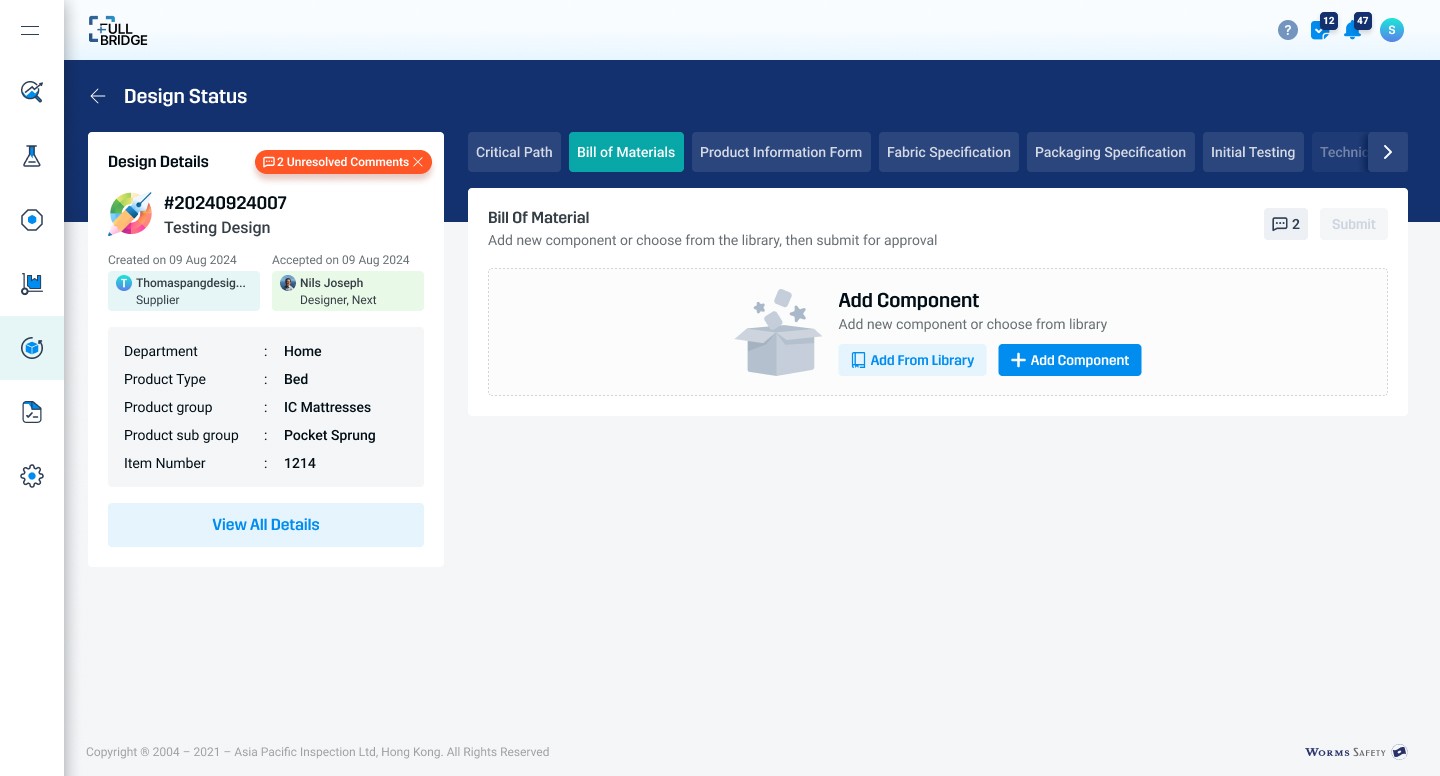
Duplicate
Add From Library
Add Component

A Refined BOM Experience
Simplifying component selection for faster, Clearer workflows
Full Bridge is a Quality management platform built for apparel and textile manufacturers and individual inspectors.
PLM
PLM is a Process—from concept to retirement—helping stakeholders maintain high standards throughout the product’s life cycle.
BOM
BOM outlines all the components and their associated materials required to build a product. Accurate BOM entry is essential for quality, compliance, and production efficiency.
Suppliers had to manually repeat data entries of the same components across sizes.
There was no clear information about which materials needed certificates.
Repeated follow-ups for certificates added friction.
The platform did not have a system to catch missing items early.
Before diving into the new design, we prioritized understanding the current system and its real-world challenges. To ensure a user-centered redesign, we conducted a discovery meeting that included Stakeholders, Suppliers (end users), Product managers.
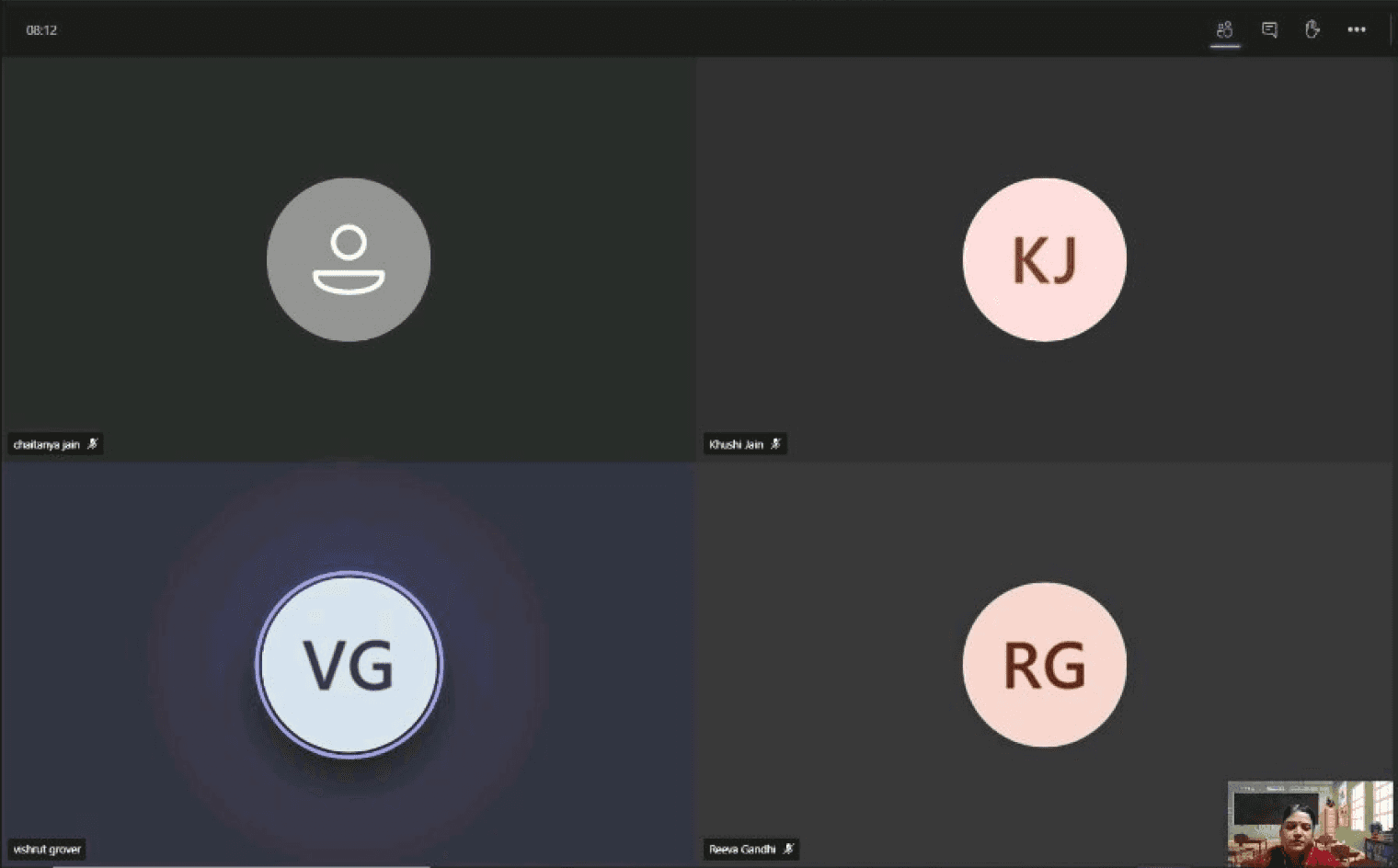
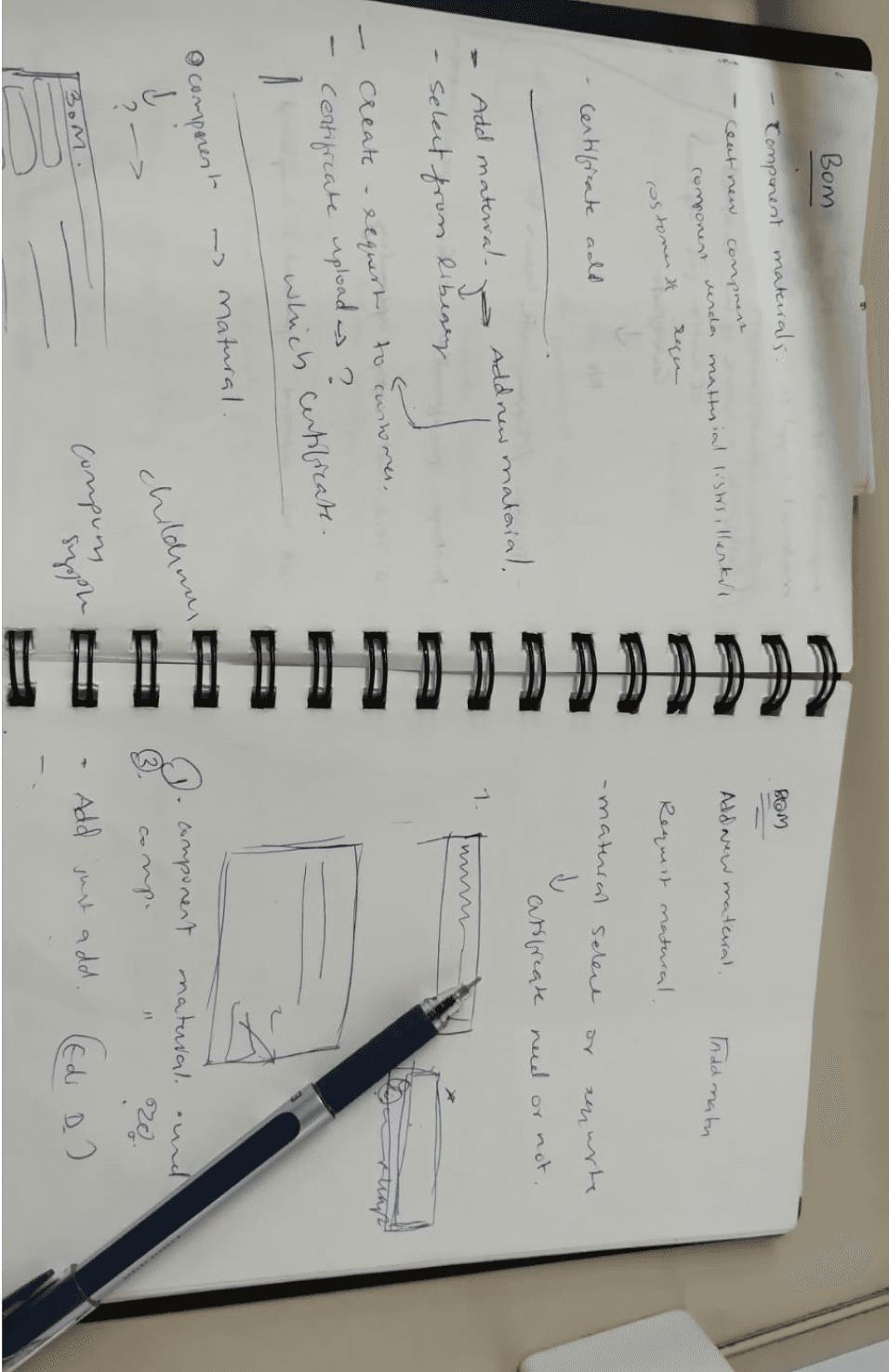

Initial meeting with stakeholders and users to map the existing BOM flow and identify key areas for improvement.
Discovery Phase
Streamlined BOM Interface for Faster, Smarter Submissions
Never miss submitting certificates again!
Say goodbye to those slip-ups for
As part of the discovery phase, we focused on deeply understanding the existing BOM experience within the PLM system.
After understanding the challenges, we focused on creating a solution that reduces friction, supports clarity, and respects the complexity of the existing PLM process
The process was complex. Understanding even the overall flow was difficult because it varied a lot among different users.
Through this exploration, we realized that completely redesigning the BOM with a modern UI would be difficult for current users to adapt to. This insight led us to consider a more progressive, user-friendly redesign approach, focusing on familiarity while improving usability.
Key Takeaways from the Meeting
The current BOM submission workflow
Pain points and frustrations from both Suppliers and approvers
What stakeholders expected from the new solution
Core business goals and must-have functionalities
This session helped us identify the most critical needs and set the foundation for a solution that aligns with both user expectations and business objectives.
Core Problems Identified
Goals
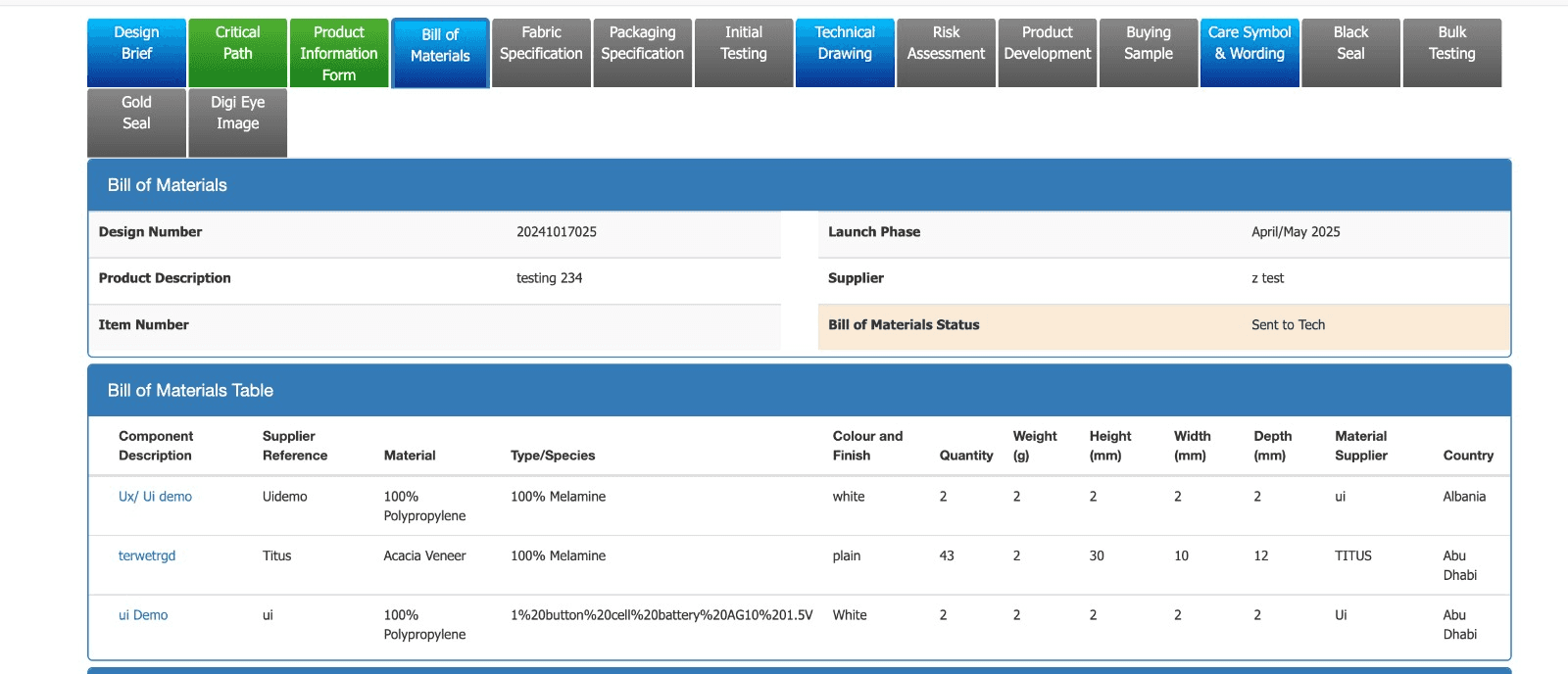
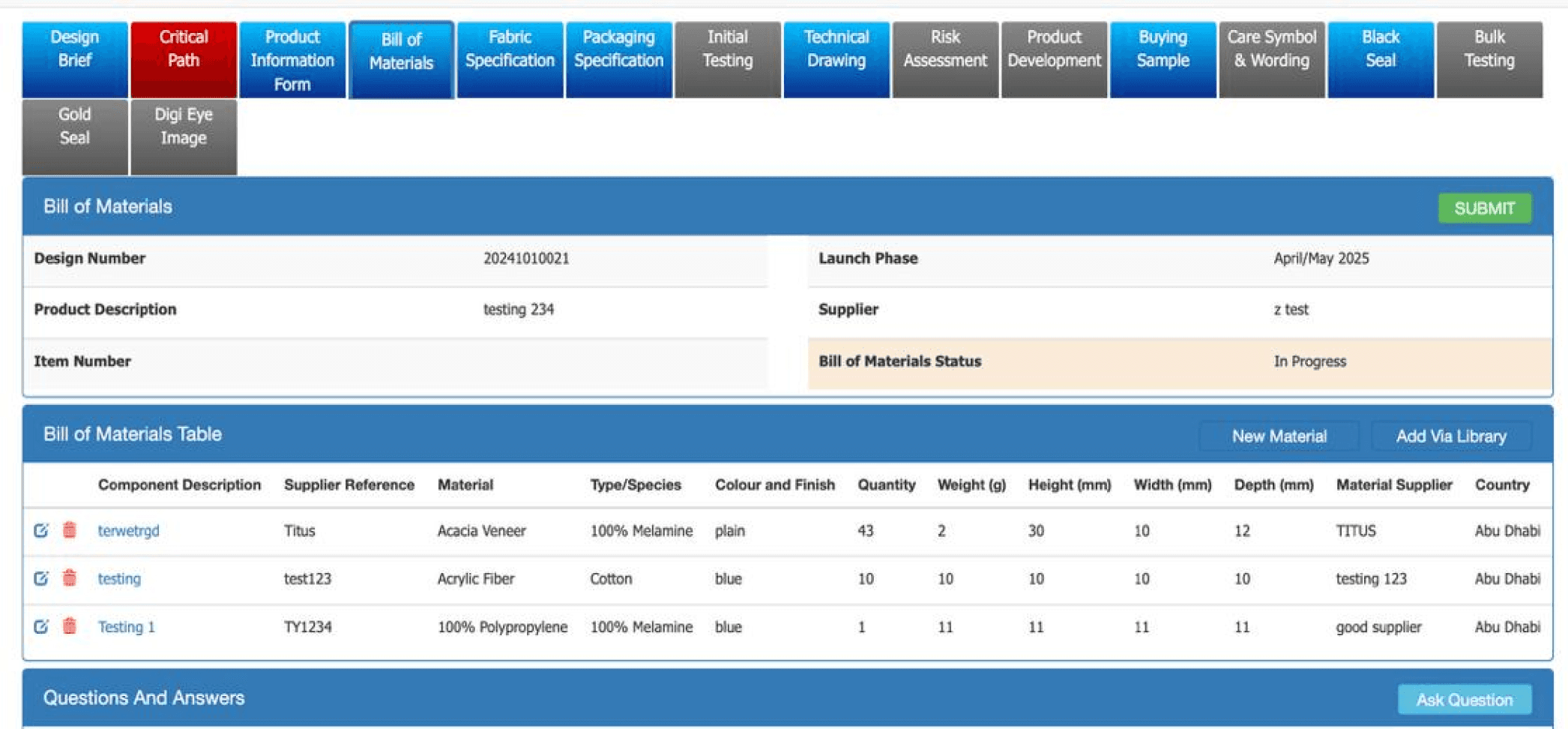
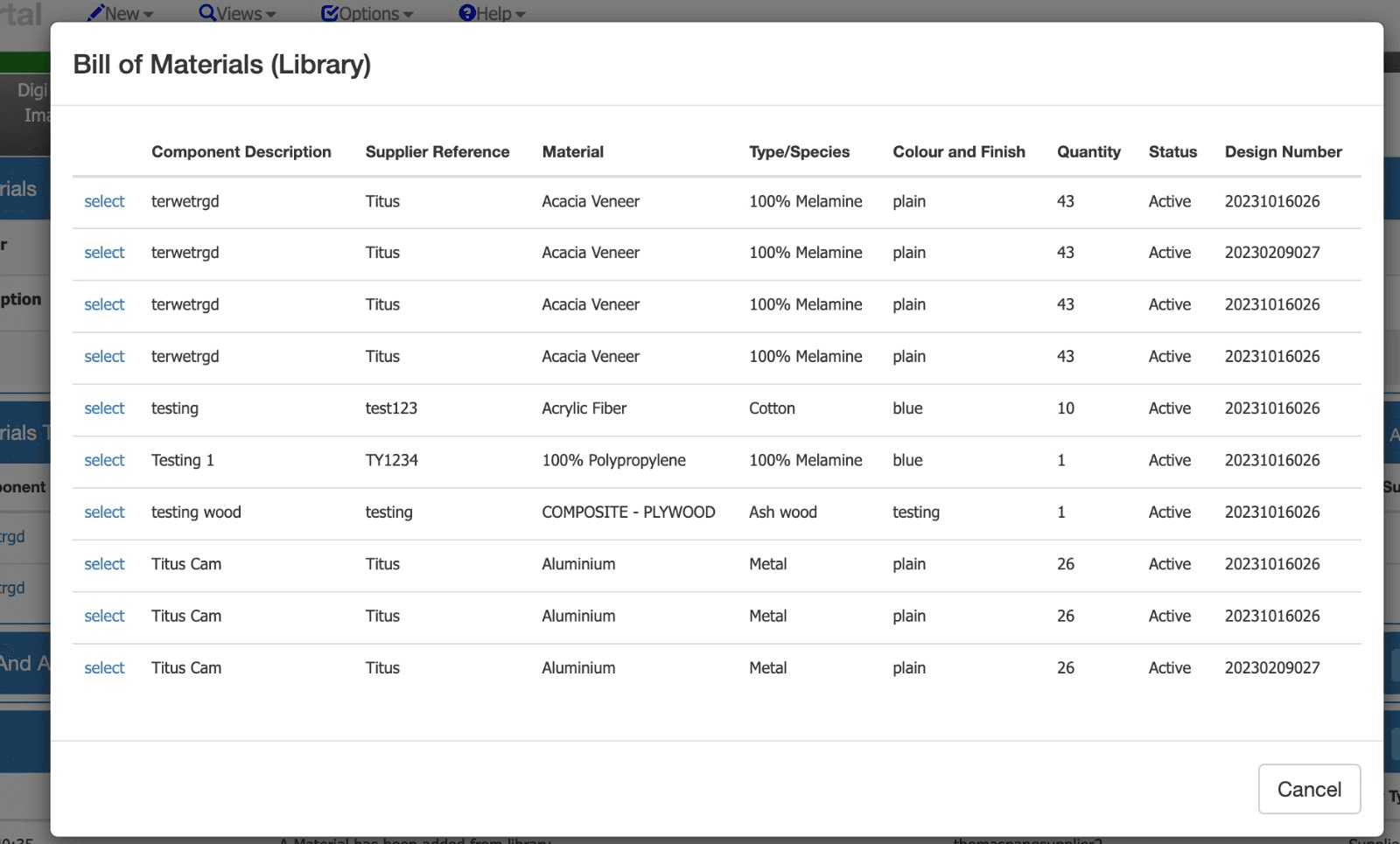
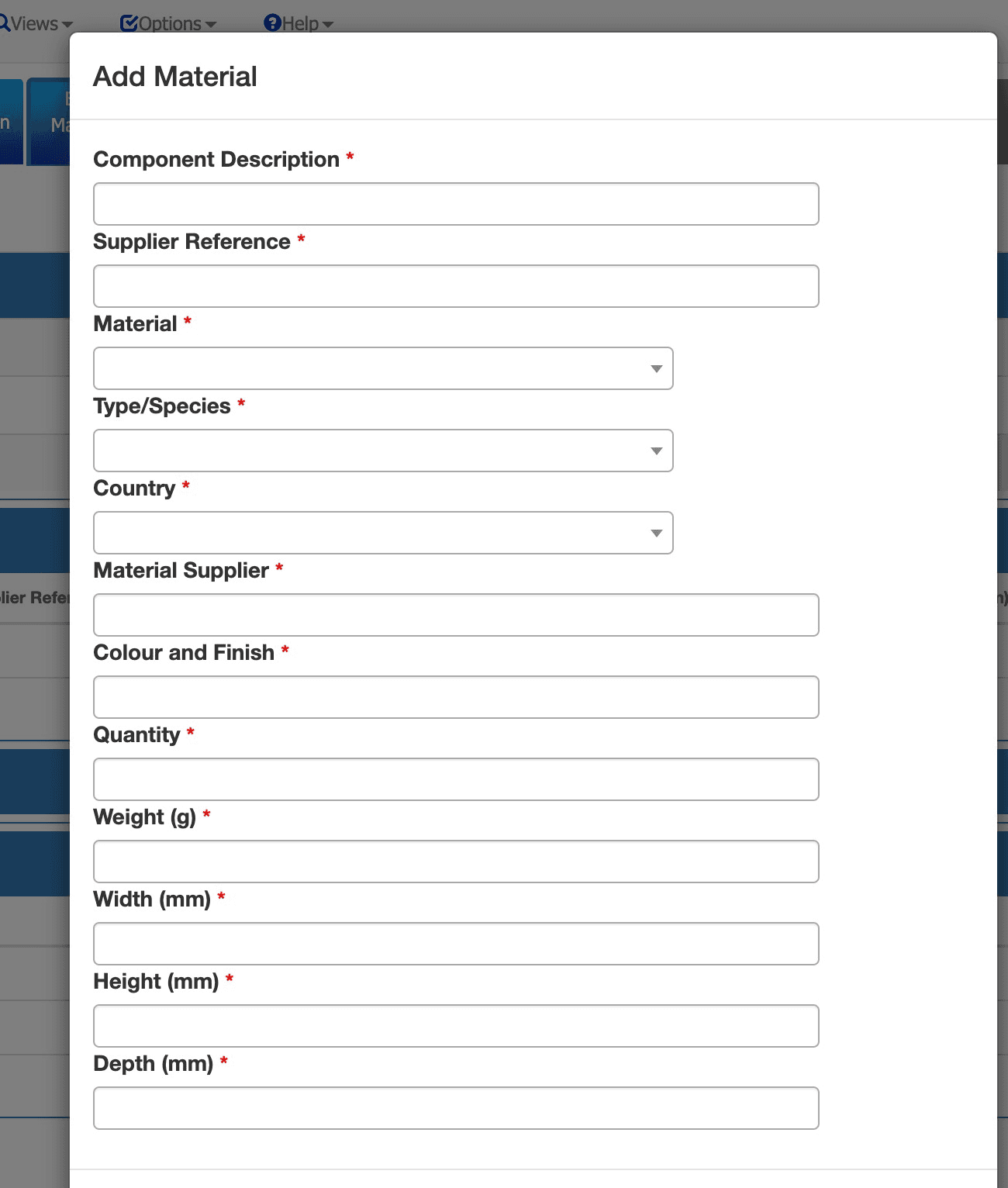
The older version screens of the BOM.
Analyze and observe how users interact with the current BOM process
Document the overall PLM flow and how the BOM fits into it
Reduce repetitive data entry across product sizes.
✅
Certification upload before submission.
✅
Minimize rework and accelerate the approval cycle.
✅
The UX design process for the BOM section was iterative and collaborative, helping me gain a deeper understanding of the complex PLM flow and user behaviors. By focusing on usability, reducing repetitive actions, and introducing smart validations, we optimized key parts of the BOM process.
As a result, the time taken to complete BOM submissions was reduced by 20%, improving both supplier efficiency and approval turnaround. The final outcome was a more intuitive and reliable BOM experience that aligned with the platform’s goals and enhanced user productivity.
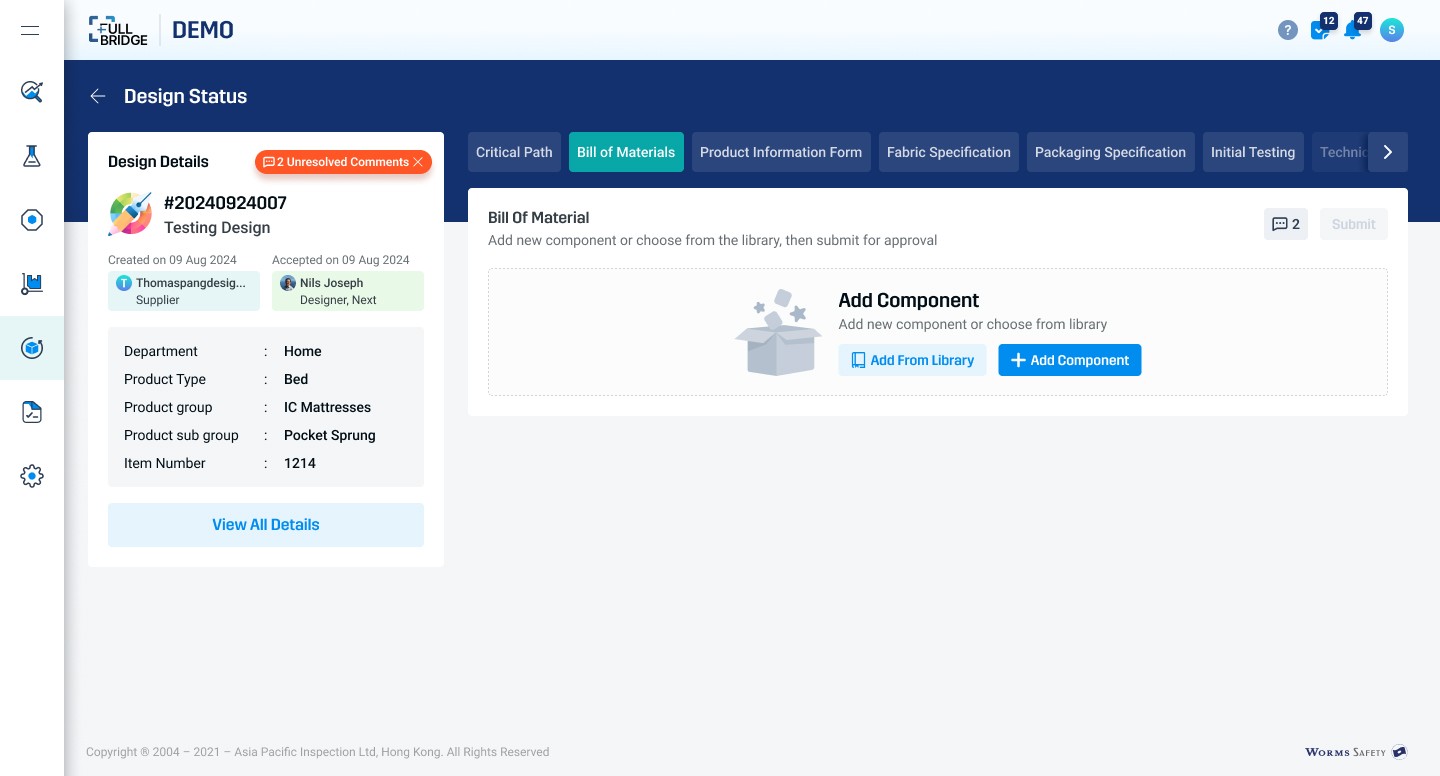
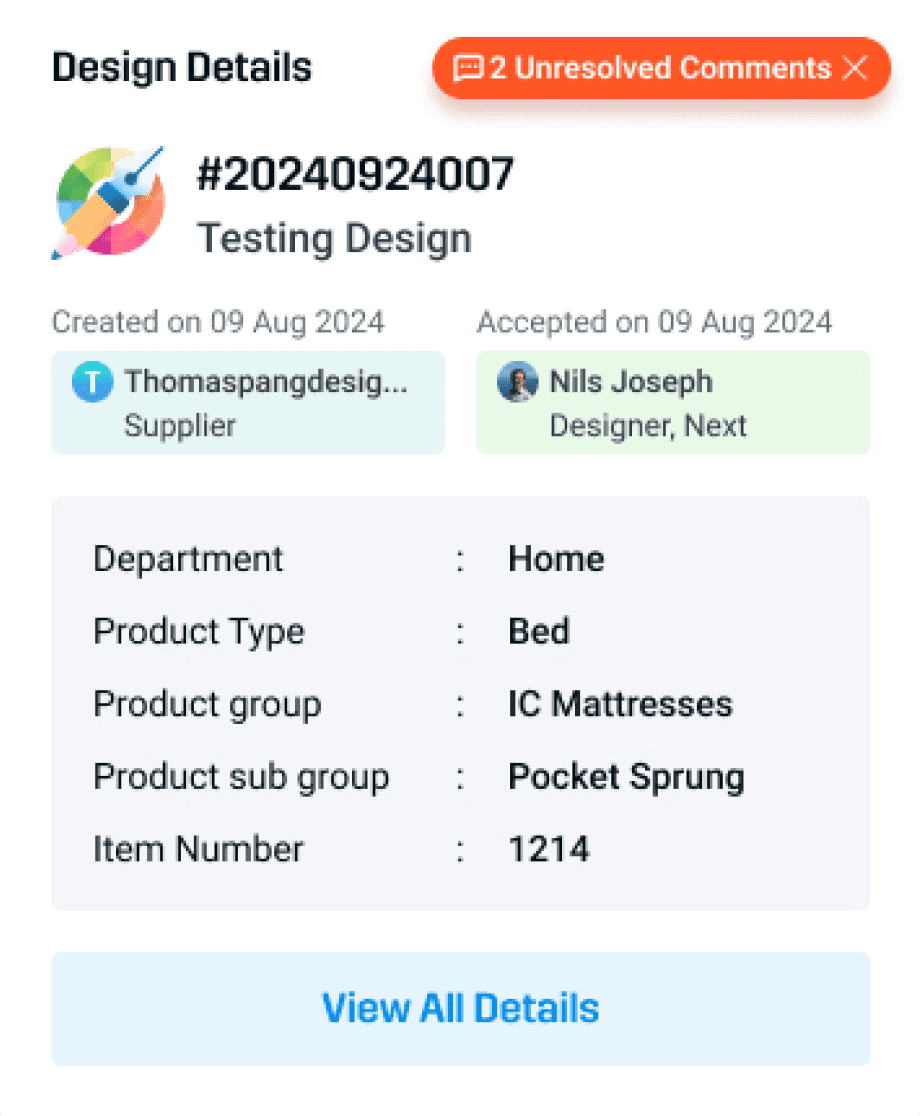
Explore the design details at a glance.

Simplified Component Adding flow
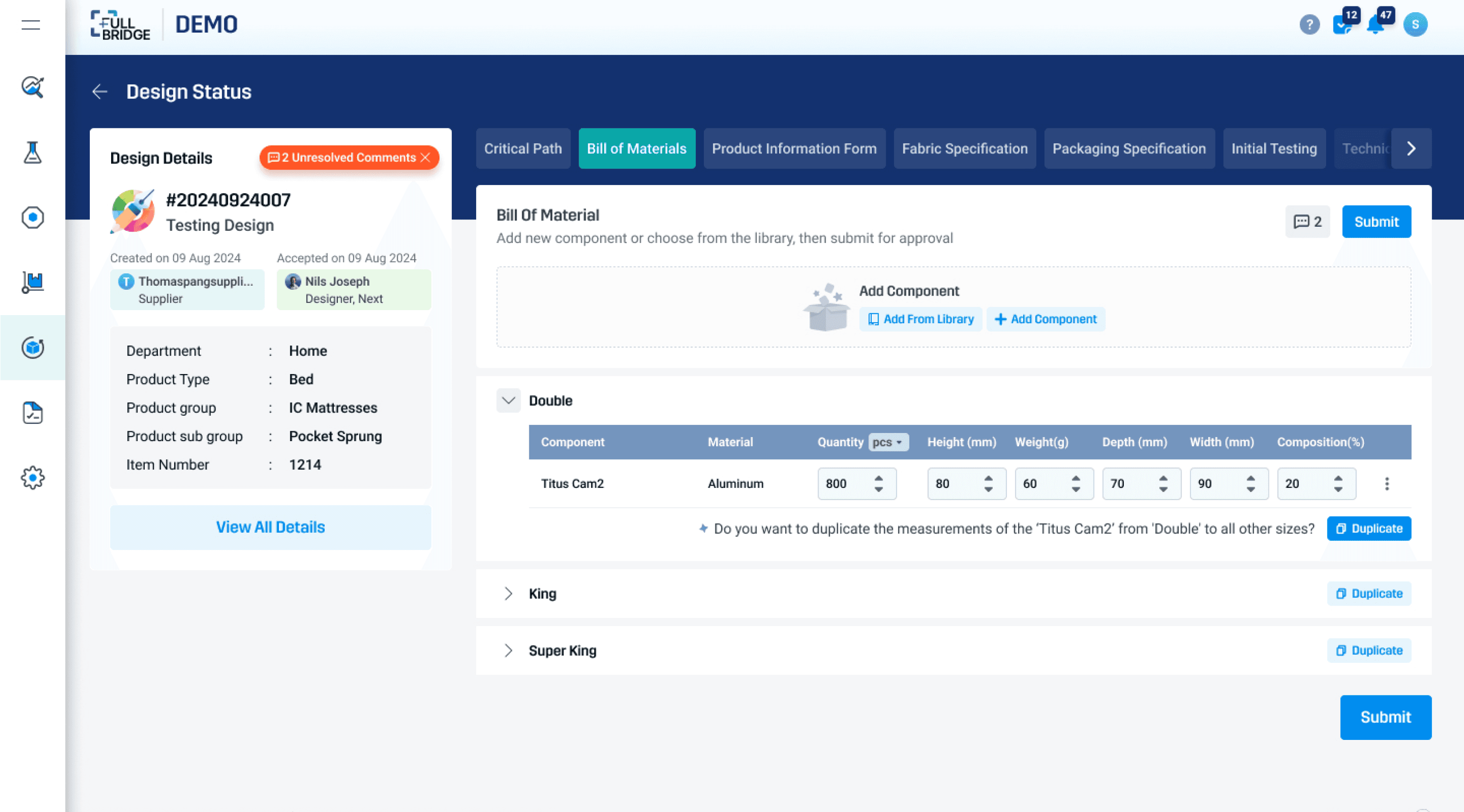

Simplified the repetitive component addition process.
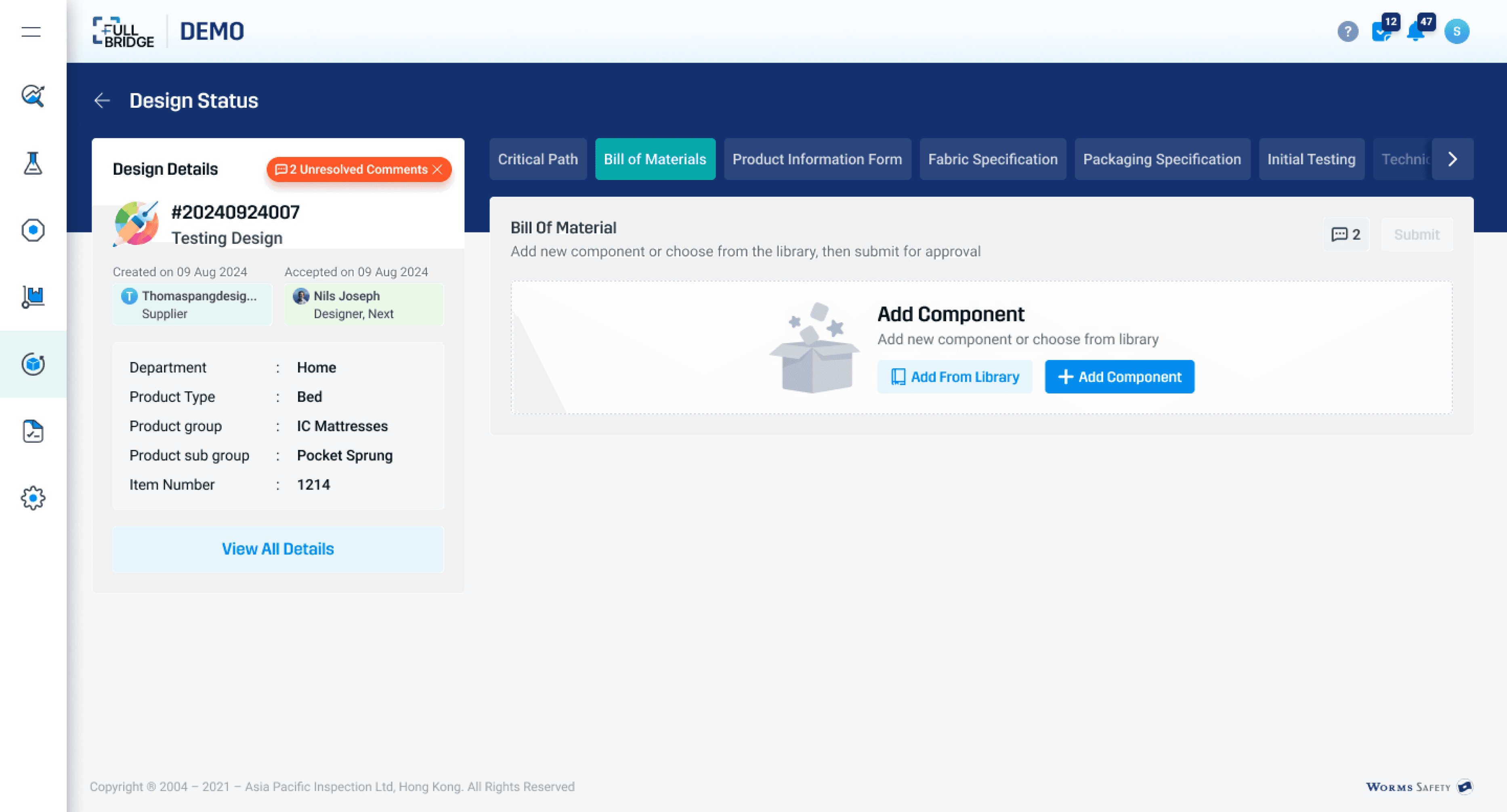
New Version Bom Default Screen
See more Works
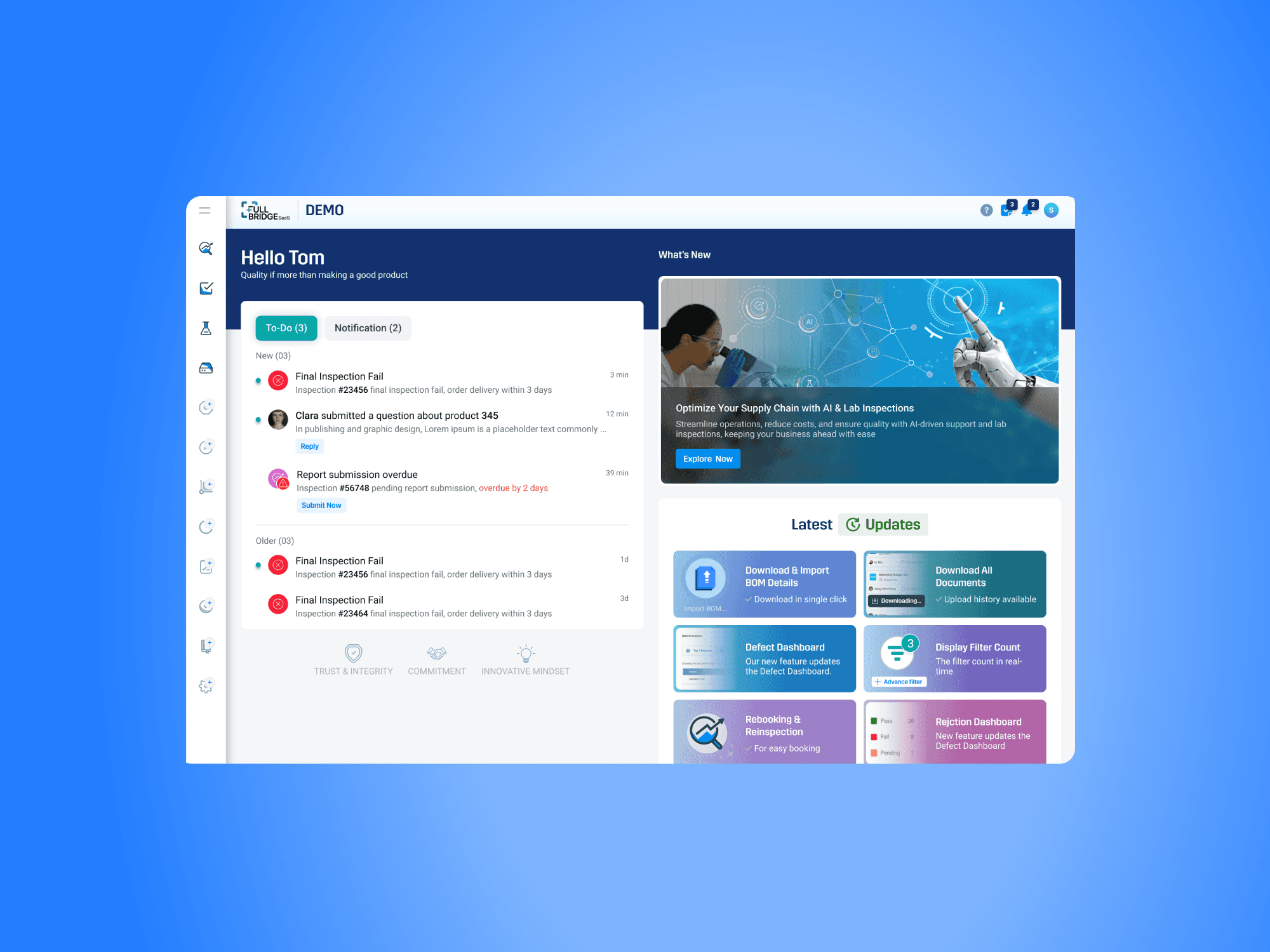
Landing page for Full Bridge
Saas
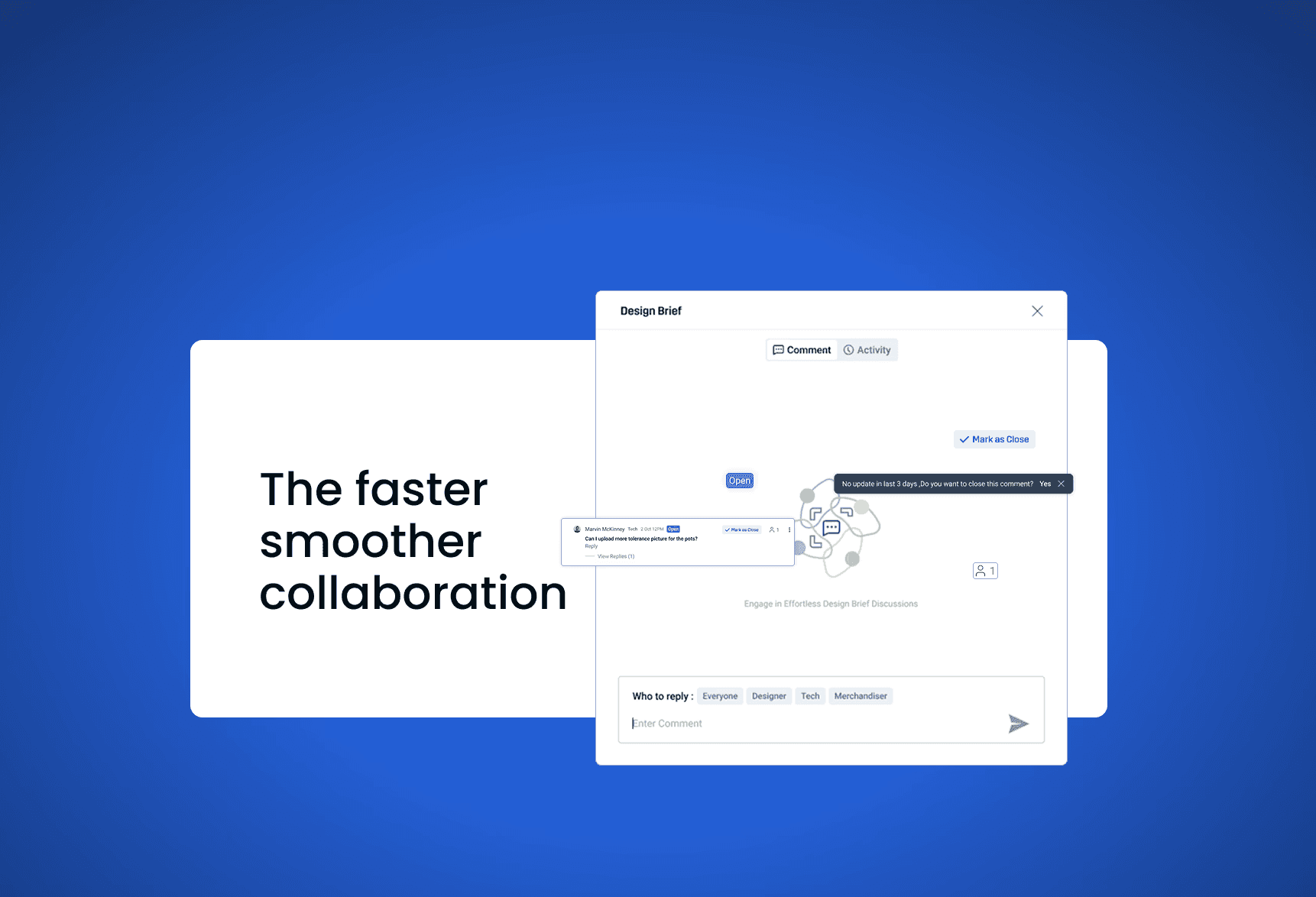
Comment and Activity
Saas

Digital Arts
Graphic Design

Design Exercises
Ui Design